
ZEN MESTEREK ZEN MASTERS
« Zen főoldal
« vissza a Terebess Online nyitólapjára
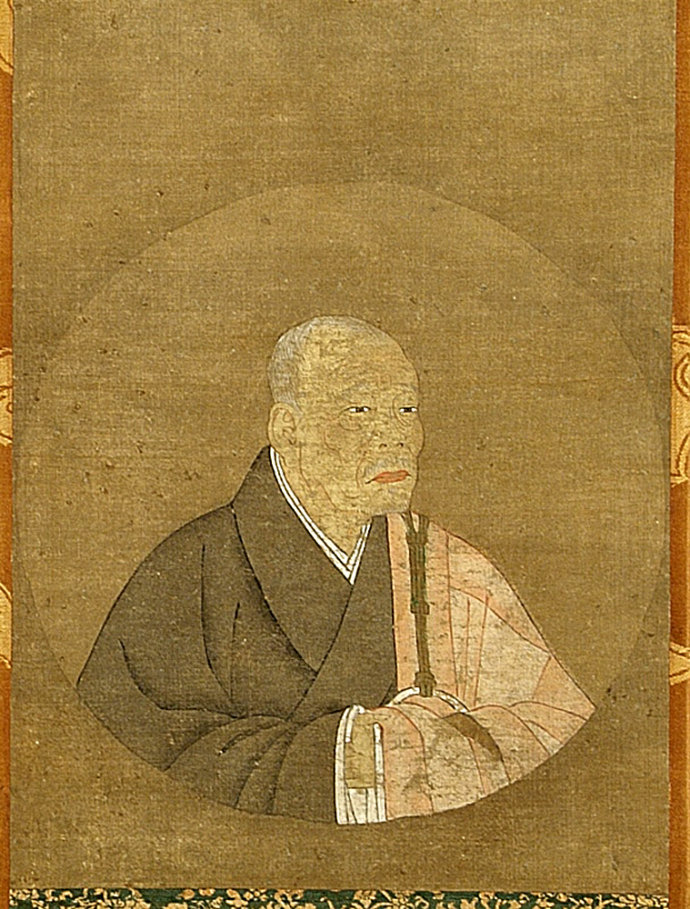
一休宗純 Ikkyū Sōjun (1394-1481)
"Error at initialization of bundled DLL edc17.dll" typically occurs when using ECU (Electronic Control Unit) tuning software, such as , which interact with Bosch EDC17 engine management systems . This specific file,
Why this works: Windows 7 has no Core Isolation, no Defender ransomware protection, and no DEP (Data Execution Prevention) policies that block "hot" DLL injection. The DLL initializes exactly as the crack author intended 8 years ago. error at initialization of bundled dll edc17dll hot
This error generally indicates that the software cannot correctly load or verify the edc17dll.dll file, which is required to process and edit Bosch EDC17 Engine Control Unit (ECU) files. Potential Causes "Error at initialization of bundled DLL edc17
If the DLL error persists and you suspect system corruption: Exclude or allow in security software 3
John Stevens
Wild Ways : Zen Poems of Ikkyū
Boston, Mass.: Shambhala, 1995. 131 p.
Table of Contents
Translator's Introduction 7 Zen Poems 21 Skeletons 115 Notes on the Poems 147 Notes on the Illustrations 151
Ikkyu, born as the sun rose on the first day of 1394, was rumored to have been
sired by the emperor Gokomatsu. His mother, a member of the influential Fujiwara clan,
had been one of Gokomatsu's attendants at court, but she had been slandered by the
empress and subsequently ousted from the palace prior to Ikkyu's birth.Being in such straitened circumstances, Ikkyu's mother was obliged to send him at
age five to Ankoku-ji, a Rinzai Zen temple in Kyoto, to be raised by the monks. The
precocious little acolyte quickly distinguished himself at the monastery, attaining renown
at that early age for both his keen mind and his impish behavior. Ikkyu may have been
mischievous, but even as a teenager he was deadly serious about Zen. When Ikkyu was
fifteen, he overheard the subabbot boasting about his family background and important
connections. "Filled with shame," Ikkyu abandoned Ankoku-ji and went to train under
Ken'o, an eccentric old-time master who lived in a shack in the hills.Ikkyu remained with Ken'o until the master's death, in 1414. Despondent, the
troubled Ikkyu contemplated suicide for a time and then sought admission to the
community of monks training with Kaso, another no-nonsense Zen master of the old
school. The regimen at Kaso's retreat consisted of heavy work, meager food, little sleep,
and endless hours of meditation.Ikkyu's struggle for awakening was long and arduous, but one midsummer night
in 1420, as he was meditating in a boat on lovely Lake Biwa, the caw of a crow brought
the twenty-six-year-old monk out of his stupor. Ikkyu's enlightenment verse:For twenty years I was in turmoil
Seething and angry, but now my time has come!
The crow laughs, an arhat emerges from the filth,
And in the sunlight a jade beauty sings!When Kaso presented Ikkyu with an inka, a seal of enlightenment, Ikkyu hurled it
to the ground in protest and stomped away. Despite this and other difficulties between
master and disciple, Kaso said, "Ikkyu is my true heir, but his ways are wild."After Kaso died, in 1428, Ikkyu indeed went his own wild way, calling himself a
"crazy cloud." He spent much of his life as a vagrant monk, wandering here and there in
the environs of Kyoto, Nara, Osaka, and Sakai. Ikkyu mingled with all manner of people,
from the highest (he had several meetings with the retired emperor Gokomatsu) to the
lowest (he often traveled in the company of beggars). Ikkyu was the darling of merchants,
who loved his antic style, yet at the same time he was a defender of the poor against
greedy landlords. On occasion Ikkyu played Robin Hood—taking money set aside for a
rich man's funeral and spending it on the homeless, for example.Once Ikkyu, clad in his customary shabby robe and tattered hat, went to beg at the
door of a wealthy family's home. He was roughly ordered around to the back of the estate
and given scraps. The following day, Ikkyu appeared at a vegetarian feast sponsored by
the family, but this time Ikkyu was decked out in the brocade robes of an abbot. When
the large tray of food was placed before him, Ikkyu removed his stiff robe and arranged it
in front of the tray. "What are you doing?" the startled host asked. "The food belongs to
the robe, not to me," Ikkyu replied as he got up to leave.Ikkyu interspersed his travels with lengthy retreats deep in the mountains, where
he grew vegetables and meditated. He counted many artists among his wide circle of
acquaintances, and Ikkyu's own dynamic art had a profound impact on the development
of poetry, painting, calligraphy, the tea ceremony, flower arranging, and Noh drama in
Japan.Periodically, Ikkyu was summoned to serve as chief priest of a temple, only to
quickly grow disgusted with the hypocrisy of fame-and-fortune Zen:Who among Rinzai's descendants really transmits his Zen?
It is concealed in this Blind Donkey.
Straw sandals, a bamboo staff, an unfettered life—
You can have your fancy chairs, meditation platforms, and fame-and-fortune Zen.Throughout his life, Ikkyu wanted his Zen to be raw, direct, and authentic. For
Ikkyu, part of being authentic was to be totally up front about sex: "If one is thirsty, he
dreams of water; if one is cold, he will dream of a thick robe. It is my nature to dream of
the pleasures of the bedchamber!" After initial experiences with homosexual love in the
monastery, Ikkyu turned to women as a constant source of inspiration and unbridled joy.
There were also difficult periods of deprivation and intense sorrow in Ikkyu's love life,
which he accepted as being equally valid Zen experiences.Following eight decades of wild ways, in 1474 Ikkyu was asked to become head
abbot of Daitoku-ji, perhaps the most important Zen temple in the cultural history of
Japan. Daitoku-ji had been destroyed in the senseless Onin War, and in seven years Ikkyu
succeeded in having it completely rebuilt. The effort exhausted him, however, and Ikkyu
passed away while seated in the lotus posture in 1481, at age eighty-seven. Not long
before his death he told his disciples:After I'm gone, some of you will seclude yourselves
in the forests and mountains to meditate, while others may
drink rice wine and enjoy the company of women. Both kinds
of Zen are fine, but if some become professional clerics,
babbling about "Zen as the Way," they are my enemies.Ikkyu began composing poetry in his early teens, and more than a thousand
poems are contained in the Crazy Cloud Anthology compiled by his disciples. Just as in
everything else, Ikkyu totally ignored the rules of composition, and his poems come in all
styles and forms. Much of his verse rants against the pervasive hypocrisy of the Buddhist
establishment and decries the corruption of the imperial court and its officials. Such
criticism was entirely justified, but even Ikkyu himself felt that he often went too far—
"How many have I slain with my barbed words?" He ranted against himself as well,
bemoaning his lack of self-control and his inordinate love of poetry. In addition to poems
on standard religious subjects, Ikkyu composed a number of poems on koan phrases
(usually his poems are more difficult to understand than the koans themselves). Ikkyu
wrote several prose poems on Buddhist themes, the best being "Skeletons," which is
included at the end of this collection.As a poet, Ikkyu was at his finest when writing about what he loved most: the
unfettered Zen life and the joys of sexual intimacy. The selection presented here in Wild
Ways consists of verses centering around those two themes. It may seem ironic that a
Buddhist monk is best remembered for his love songs, but we also have the example of
the sixth Dalai Lama, who once chanted:If the bar-girl does not falter,
The beer will flow on and on.
This maiden is my refuge
And this place my haven.
One Short Pause
One short pause between
The leaky road here and
The never-leaking Way there:
If it rains, let it rain!
If it storms, let it storm!–
A Crazy Cloud, out in the open,
Blown about madly, as wild as they come!
Who knows where this cloud will go, where the wind will still?
The sun rises from the eastern sea, and shines over the land.–
Forests and fields, rocks and weeds - my true companions.
The wild ways of the Crazy Cloud will never change.
People think I'm mad but I don't care:
If I'm a demon here on earth, there is no need to fear the hereafter.–
Every day, priests minutely examine the Dharma
And endlessly chant complicated sutras.
Before doing that, though, they should learn
How to read the love letters sent by the wind and rain, the snow and moon.–
Monks these days study hard in order to turn
A fine phrase and win fame as talented poets.
At Crazy Cloud's hut there is no such talent, but he serves up the taste of truth
As he boils rice in a wobbly old cauldron.–
Bliss and sorrow, love and hate, light and shadow, hot and cold, joy and anger, self and other.
The enjoyment of poetic beauty may well lead to hell.
But look what we find strewn all along our Path:
Plum blossoms and peach flowers!–
Ten days in this temple and my mind is reeling!
Between my legs the red thread stretches and stretches.
If you come some other day and ask for me,
Better look in a fish stall, a sake shop, or a brothel.–
Returning to the City from the Mountains
Crazy Cloud blown by who knows what wild wind.
In the mountains by day, in the city by night.
I shout katsu and wield the staff when I see fit,
Even Rinzai and Tokusan would be no match for me.–
I Hate Incense
A master's handiwork cannot be measured
But still priests wag their tongues explaining the "Way" and babbling about "Zen."
This old monk has never cared for false piety
And my nose wrinkles at the dark smell of incense before the Buddha.–
Crazy Cloud speaks of Daito's unsurpassed brilliance
But the clatter of royal carriages about the temple gates drowns him out
And no one listens to tales of the Patriarch's long years
Of hunger and homelessness beneath Gojo Bridge.–
Monk Gantō practiced Zen while rowing a boat;
Monk Chin gathered rushleaf to make sandals.
I always praise the great worth of a single raincoat and straw hat -
But who is there to appreciate their true elegance?–
Raincoat and Straw Hat
Woodcutters and fishermen know just how to use things.
What would they do with fancy chairs and meditation platforms?
In straw sandals and with a bamboo staff, I roam three thousand worlds,
Dwelling by the water, feasting on the wind, year after year.–
A Fisherman
Studying texts and stiff meditation can make you lose your Original Mind.
A solitary tune by a fisherman, though, can be an invaluable treasure.
Dusk rain on the river, the moon peeking in and out of the clouds;
Elegant beyond words, he chants his songs night after night.–
Who needs the Buddhism of ossified masters?
Me, I've spent three decades alone in the mountains
And solved all my koans there,
Living Zen among the tall pines and high winds.–
A Moonless Midautumn
No moon on the best night for moon viewing;
I sit alone near the iron candle stand and quietly chant old tunes-
The best poets have loved these evenings
But I just listen to the sound of the rain and recall the emotions of past years.–
My Mountain Monastery
A thatched hut of three rooms surpasses seven great halls.
Crazy Cloud is shut up here far removed from the vulgar world.
The night deepens, I remain within, all alone,
A single light illuminating the long autumn night.–
A Hermit Monk in the Mountains
I like it best when no one comes,
Preferring fallen leaves and swirling flowers for company.
Just an old Zen monk living like he should,
A withered plum tree suddenly sprouting a hundred blossoms.–
Lingering Chrysanthemums in the South Garden
The last chrysanthemums of late autumn fade along the east hedge;
I face the southern mountains, my thoughts a million miles away.
I know nothing about the Three Essentials or
Three Mysteries of Zen Buddhism,
Delighting instead in the elegance of Yuan-rning's songs.–
Shut up in a hut chanting verse beside a single lamp;
A poet-monk just follows nature without a set path.
The advent of spring lifts my melancholy a bit, but the night is still so chill,
Freezing even the plum blossoms on my calligraphy paper!–
Relativity
Buddha died just when nature was coming back to life:
One sword cleaves cleanly soul and body.
It is hard to obtain Buddhahood that is not born and does not die --
Flowers appear and disappear seamlessly in spring.–
Enlightenment and Delusion
No beginning, no end, this one mind of ours.
The Original Mind cannot become Buddhanature.
Original Buddhahood is Buddha's mischievous talk;
The Original Mind of sentient beings is nothing but delusion.–
My real dwelling
Has no pillars
And no roof either
So rain cannot soak it
And wind cannot blow it down!–
Coming alone,
Departing alone,
Both are delusion:
Let me teach you how
Not to come, not to go!–
Of all things
There is nothing
More congratulatory
Than a weatherbeaten
Old skull!–
I'd like to
Offer something
To help you
But in the Zen School
We don't have a single thing!–
Poem Inscribed on a Painting of Bodhidharma
He does not lie down, he does not get up,
He does not think about things.
He does not know,
And if you ask he will say mu!
Even if you do not ask
He will give you mu!
Question or not,
He does not have a word to say.
Honorable Bodhidharma --
What should we keep in our hearts?–
My Hovel
The world before my eyes is wan and wasted, just like me.
The earth is decrepit, the sky stormy, all the grass withered.
No spring breeze even at this late date,
Just winter clouds swallowing up my tiny reed hut.–
Poem Exchanged for Food
Once again I'm roaming East Mountain hungry.
When you are starving, a bowl of rice is worth a thousand pieces of gold.
An ancient worthy swapped his wisdom for a few lichee nuts,
Yet I still cannot refrain from singing odes to the wind and moon.–
In Thanks for a Gift of Soy Sauce
Untrammeled and free for thirty years
Crazy Cloud practices his own brand of Zen.
A hundred flavors spice my simple fare:
Thin gruel and twig tea are part of the True Transmission.–
Cancel All Debts
Robbers never strike at the homes of the poor;
Private wealth does not benefit the entire nation.
Calamity has its source in the accumulated riches of a few,
People who lose their souls for ten thousand coins.–
A Poem of Protest
Over and over,
Taking and taking
From this village:
Starve the farmers
And how will you live?–
If your meditation cannot work in the Hall of Life and Death,
Fame and fortune will captivate you completely.
Human beings have a mixed bill of fare to be sure:
Sometimes tasty meat stew, sometimes weak citrus-rind tea!–
Fleeing from Mika-no-Hara to Nara to Escape the War
The road I travel is hard, so hard, and I know every step.
These mountains and rivers must be like those of China.
After traversing ten thousand leagues and wading through ten thousand scrolls,
I've learned to savor the poetry of Tu Fu.–
Typhoons and floods make everyone suffer,
And tonight there will be no singing and dancing.
The Dharma flourishes and decays, ages come and go:
So right yet so sad-the bright moon sets behind the Western Pavilion.–
A Gentleman's Wealth
A poet's treasure consists of words and phrases;
A scholar's days and nights are perfumed with books.
For me, plum blossoms framed by the window is an unsurpassable pleasure;
A stomach tight with cold but still enchanted by snow, the moon, and dawn frost.–
Fertilizing My Bamboo Grove with Horse Manure
Look, look, how I nourish the phoenix mind of mine:
Swallows, sparrows, pigeons, crows, all birds are welcome here.
Rinzai planted pine, Ikkyii cultivates bamboo --
Later generations will praise us for really doing something.–
A Meal of Fresh Octopus
Lots of arms, just like Kannon the Goddess;
Sacrificed for me, garnished with citron, I revere it so!
The taste of the sea, just divine!
Sorry, Buddha, this is another precept I just cannot keep.–
Honored One of the Forest
I raised a small sparrow that I loved deeply. One day it
suddenly died and, griefstricken by the loss, I decided to
conduct afuneral service for my little companion just as
if it were a human being.At first I called it Disciple
Sparrow, but then upon its death I changed it to Buddha
Sparrow. Finally, I presented it with the posthumous
Buddhist title, Honored One of the Forest. I composed
this poem as a memorial.A sixteen-foot body of purple and gold
Lies between the twin trees of nirvana.
Now liberated from falsehood, beyond life and death,
Yet present in a thousand mountains, ten thousand trees, and hundreds of springs.–
Nightingale
A bird too chants sutras of salvation
Filling the trees with marvelous tones.
Forest flowers are like Bodhisattvas,
Surrounding a little bird-buddha.–
Nature's Way
The wise heathens have no knowledge;
They just keep their mind continually set on the Way.
There are no big-shot Buddhas in nature,
And ten thousand sutras are distilled in a single song.–
The Dreamy Sound of Bokushitsu's Shakuhachi Awakened Me
from Deep Sleep One Moonlit NightA wonderful autumn night, fresh and bright;
Over the echo of music and drums from a distant village
The single clear tone of a shakuhachi brings a flood of tears –
Startling me from a deep, melancholy dream.–
Exhausted with gay pleasures, I embrace my wife.
The narrow path of asceticism is not for me;
My mind runs in the opposite direction.
It is easy to be glib about Zen - I'll just keep my mouth shut
And rely on love play all the day long.–
A Man's Root
Eight inches strong, it is my favorite thing;
If I'm alone at night, I embrace it fully—
A beautiful woman hasn't touched it for ages.
Within my fundoshi there is an entire universe!–
A Woman's Sex
It has the original mouth but remains wordless;
It is surrounded by a magnificent mound of hair.
Sentient beings can get completely lost in it
But it is also the birthplace of all the Buddhas of the ten thousand worlds.–
Rinzai's disciples never got the Zen message,
But I, the Blind Donkey, know the truth:
Love play can make you immortal.
The autumn breeze of a single night of love is better than a hundred thousand years of
sterile sitting meditation. . .–
Stilted koans and convoluted answers are all monks have,
Pandering endlessly to officials and rich patrons.
Good friends of the Dharma, so proud, let me tell you,
A brothel girl in gold brocade is worth more than any of you.–
Emerging from the world's grime, a puritan saint is still nowhere near a Buddha.
Enter a brothel once and Great Wisdom will explode upon you.
Manjushri should have let Ananda enjoy himself in the whorehouse –
Now he will never know the joys of elegant love play.–
A sex-loving monk, you object!
Hot-blooded and passionate, totally aroused.
Remember, though, that lust can consume all passion,
Transmuting base metal into pure gold.–
The lotus flower
Is unstained by mud;
This single dewdrop,
Just as it is,
Manifests the real body of truth.–
Follow the rule of celibacy blindly and you are no more than an ass;
Break it and you are only human.
The spirit of Zen is manifest in ways countless as the sands of the Ganges.
Every newborn is a fruit of the conjugal bond.
For how many aeons have secret blossoms been budding and fading?–
With a young beauty, sporting in deep love play;
We sit in the pavilion, a pleasure girl and this Zen monk.
Enraptured by hugs and kisses,
I certainly don't feel as if I am burning in hell.–
In Praise of Fish-Basket Kannon
Crimson cheeks, light-colored hair, full of compassion and love.
Lost in a dream of love play, I contemplate her beauty.
Her thousand eyes of great mercy look upon all but see no one beyond redemption.
This goddess can even be a fisherman's wife by a river or sea, singing of salvation.–
Long ago, there was an old woman who had supported a hermit monk for twenty years.
She had a sixteen-year-old girl bring him meals. One day she instructed the girl to
embrace the monk and ask, "How do you feel right now? " The young girl did as told,
and the monk's response was, "I'm an old withered tree against a frigid cliff on the
coldest day of winter. " When the girl returned and repeated the monk's words to the old
woman, she exclaimed. "For twenty years I've been supporting that base worldling!" The
old woman chased the monk out and put the hermitage to the torch.
The old woman was bighearted enough
To elevate the pure monk with a girl to wed.
Tonight if a beauty were to embrace me
My withered old willow branch would sprout a new shoot!–
Poem Presented to My Friend Ako at the Hot Spring
It is nice to get a glimpse of a lady bathing—
You scrubbed your flower face and cleansed your lovely body
While this old monk sat in the hot water,
Feeling more blessed than even the emperor of China!–
When we parted, it broke my heart;
Her powdered cheeks were more beautiful than spring flowers.
My lovely miss is now with another,
Singing the same love song but to a different tune.–
Reminiscences
Memories and deep thoughts of love pain my breast;
Poetry and prose all forgotten, not a word left.
There is a path to enlightenment but I've lost heart for it.
Today, I'm still drowning in samsara.–
The Dharma Master of Love
My life has been devoted to love play;
I've no regrets about being tangled in red thread from head to foot,
Nor am I ashamed to have spent my days as a Crazy Cloud –
But I sure don't like this long, long bitter autumn of no good sex!–
For ten straight years, I reveled in pleasure houses.
Now I'm all alone deep in the dark mountain valley.
Thirty thousand cloud leagues live between me and the places I love.
The only sound that reaches my ears is the melancholy wind blowing in the pines.–
Three Poems on Love and Longing
Day and night I cannot keep you out of my thoughts;
In the darkness, on an empty bed, the longing deepens.
I dream of us joining hands, exchanging words of love,
But then the dawn bell shatters my reverie and rends my heart.–
Women, lovely flowers that bloom and quickly fade;
Flowery faces, in full flush, lovely as dreams.
When flowers burst open they grow heavy with passion
But once they fall, no one speaks of them again.–
Even if I were a god or a Buddha you'd be on my mind.
I sit beneath the lamp, a skinny monk chanting love songs.
The fierce autumn wind nearly bowls me over
And my heart is choked with thick clouds.–
Under the Fragrant Eaves
The bamboo thicket has a new set of sprouts.
This old monk feels young again,
My beauty is just thirty-six.
A fresh breeze blows through the crumbling walls.–
The Stick of Zen
Sexual love can be so painful when it is deep,
Making you forget even the best prose and poetry.
Yet now I experience a heretofore unknown natural joy,
The delightful sound of the wind soothing my thoughts.–
To Lady Mori
The most beautiful and truest of all women;
Her songs the fresh, pure melody of love.
A voice and sweet smile that rends my heart—
I'm in a spring forest of lovely cherry-apples.–
Every night, Blind Mori accompanies me in song.
Under the covers, two mandarin ducks whisper to each other.
We promise to be together forever,
But right now this old fellow enjoys an eternal spring.–
Lady Mori's Gifted Touch
My hand is no match for that of Mori.
She is the unrivaled master of love play:
When my jade stalk wilts, she can make it sprout!
How we enjoy our intimate little circle.–
Lady Mori Rides in a Palanquin
My blind love goes riding in a palanquin on spring outings.
When I'm sorely distressed she lifts my gloom.
Everyone makes fun of us, but
I love to gaze upon her, an elegant beauty.–
Within your bedchamber, emotion for a torrent of poems.
Amid the flowers we sing and dance blissfully;
Sporting like mandarin ducks --
Our love play soars to heights unimagined.–
Dead winter but our poetry glows;
Drunk after downing cup after cup.
Years since I enjoyed such sweet love play.
The moon disappears, dawn breaks, yet we hardly notice.–
A Jonquil Flower
The perfume from her narcissus causes my
bud to sprout, sealing our love pact.
The delicate fragrance of the flower of eros,
A waterborne nymph, she engulfs me in love play,
Night after night, by the emerald sea, under the azure sky.–
My Beauty's Dark Place Is a Fragrant Narcissus
I am infatuated with the beautiful Mori from the celestial garden.
Lying on the pillows, tongue on her flower stamen,
My mouth fills with the pure perfume of the waters of her stream.
Twilight comes, then moonlight shadows, as we sing fresh songs of love.–
By river or sea, in the mountains,
A man of the Way shuns fame and fortune.
Night after night, we two lovebirds snuggle on the meditation platform,
Lost in dalliance, intimate talk, and orgasmic bliss.–
To Lady Mori with Deepest Gratitude and Thanks
The tree was barren of leaves but you brought a new spring.
Long green sprouts, verdant flowers, fresh promise.
Mori, if I ever forget my profound gratitude to you,
Let me burn in hell forever.–
To My Daughter
Even among beauties she is a precious pearl;
A little princess in this sorry world.
She is the inevitable result of true love,
And a Zen master is no match for her!–
Farewell, Lady Mori
Ten years ago beneath the blossoms we began a fragrant alliance.
Each stage was a delight, full of endless passion.
How poignant, never again to pillow my head on her lap.
Making sweet love together, we vowed to be together always.–
Upon Becoming Abbot of Daitoku-ji
Daitō's descendants have nearly extinguished his light;
After such a long, cold night, the chill will be hard to thaw even with my love songs.
For fifty years, a vagabond in a straw raincoat and hat --
Now I'm mortified as a purple-robed abbot.–
Self-Portrait
The long sword flashes against heaven.
My skeleton exposed for all to see.
Me, I am praised as a general of Zen,
Tasting life and enjoying sex to the fullest!–
Death Verse
In this vast realm
Who understands my Zen?
Even if Master Kidō shows up,
He is not worth a cent!– – –
Cf.
Ikkyū Sōjun (1394-1481)
In: Three Zen Masters: Ikkyū, Hakuin, and Ryōkan
by John Stevens
Kodansha International, Tokyo, New York, London, 1993, pp. 9-57.
– – –
When it blows,
The mountain wind is boisterous,
But when it blows not,
It simply blows not.–
Dimly for thirty years;
Faintly for thirty years, -
Dimly and faintly for sixty years:
At my death, I pass my faeces and offer them to Brahma.–
Like vanishing dew,
a passing apparition
or the sudden flash
of lightning -- already gone --
thus should one regard one's self.–
Cover your path
With fallen pine needles
So no one will be able
To locate your
True dwelling place.–
Every day priests minutely examine the Dharma
And endlessly chant complicated sutras.
Before doing that, though, they should learn
How to read the love letters sent by the wind and rain, the snow and moon.
–
A wonder autumn night, fresh and bright;
Over the echo of music and drums from a distant village
The single clear tone of a shakuhachi brings a flood of tears—
Startling me from a deep, melancholy dream.–
