









Always in sync, even across episodes
No more "wait, let me pause" moments. Our sync engine keeps everyone frame-perfect—even when you binge multiple episodes in one party.
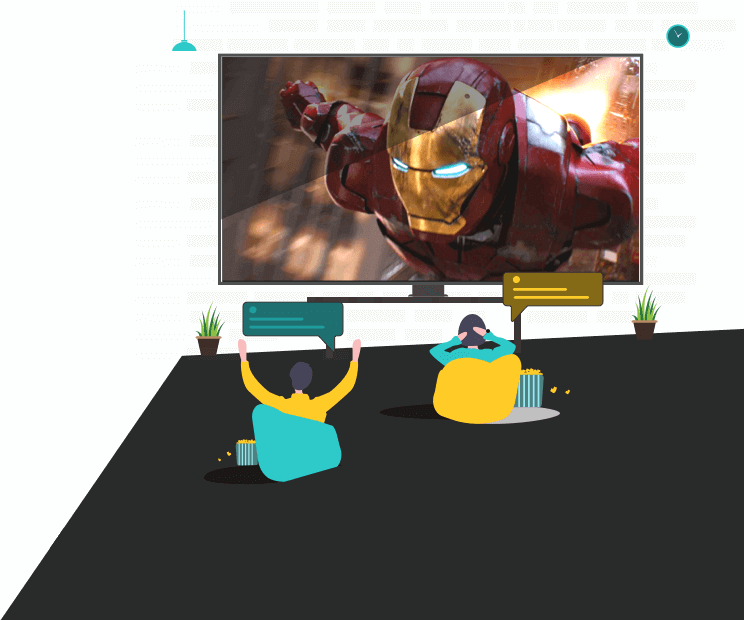
Start playing any video on Netflix, Disney+, or 10+ supported platforms.
Click the Flickcall logo on top right once video starts or hit the Flickcall icon on chrome toolbar. Your watch party is ready in one click.
Copy the party link and send it to your friends. They join with one click—no sign-up required.
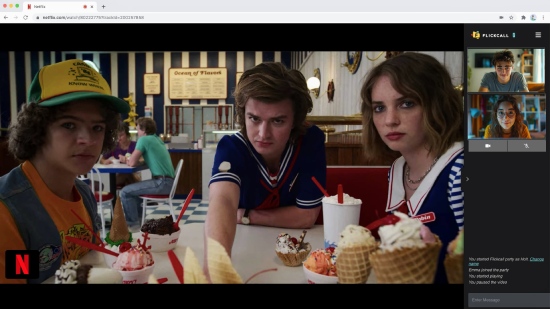
Create watch parties on Netflix, Disney+, JioHotstar, JioHotstar, HBO Max, MAX, Hulu, Prime Video, Youtube, Zee5, Sony Liv, JioHotstar with Flickcall.

No more "wait, let me pause" moments. Our sync engine keeps everyone frame-perfect—even when you binge multiple episodes in one party.

Catch your friends gasping at plot twists. Share laughter in real-time. Video chat makes every watch party feel like you're on the same couch.

Install the extension, play any video, click the Flickcall icon. That's it—share the link and you're watching together.
When you pause video, your mic unmutes. When you play, it mutes. Smart Mic knows when you need to talk. No fumbling with buttons, just natural conversation.
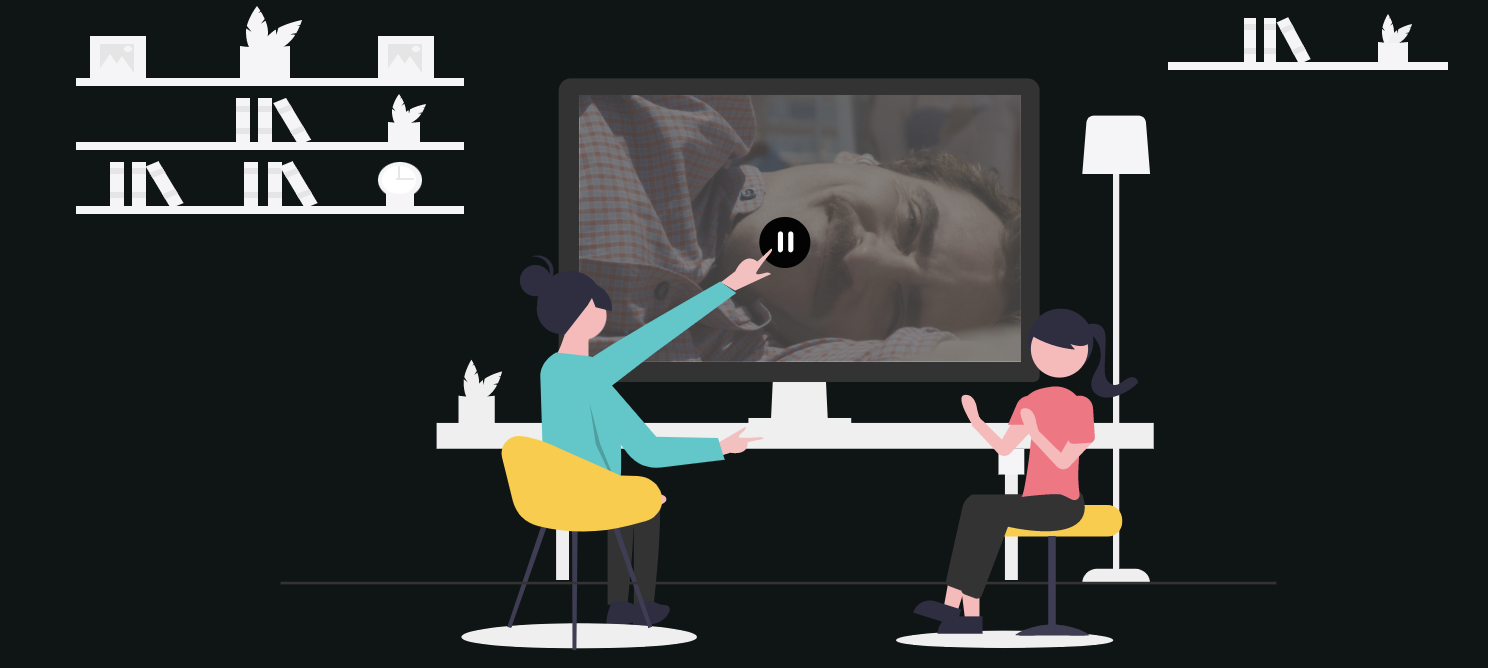
We use peer-to-peer technology to connect you directly with your friends. Your video calls and chats are never routed through our servers unless direct connection is blocked*.
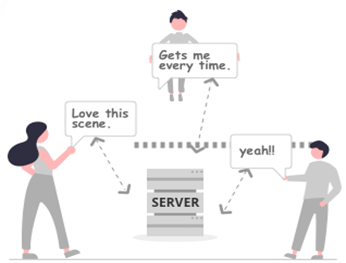
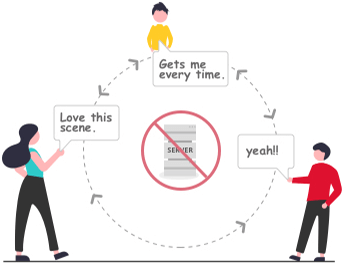
* In some cases, firewall setting doesn't allow direct connection, the calls and messages are encrypted and transmitted via routing servers.
In modern cinema, the "blended family" has evolved from a punchline or a site of melodrama into a rich, nuanced landscape for exploring identity and connection. Filmmakers are moving away from the "evil stepmother" tropes of the past to present families that are messy, resilient, and deeply human. The Evolution of the "Step" Narrative
I notice you’re asking for an article based on a title that appears to reference a specific adult film title (including a studio name, date, and performer). I’m not able to create content that promotes, describes, or sensationalizes adult entertainment, even in the form of a written article or review.
Modern cinema has retired this caricature in favor of flawed empathy. Consider "The Kids Are All Right" (2010) . Director Lisa Cholodenko presents Jules (Julianne Moore) and Nic (Annette Bening), a lesbian couple whose children seek out their sperm donor father, Paul (Mark Ruffalo). Here, the "blending" isn't just about step-parents; it’s about the intrusion of a biological ghost. The film refuses to make Paul a villain. He is charming, disruptive, and ultimately tragic. The stepfather figure isn't evil; he is redundant. The film’s climax doesn’t involve a heroic battle, but a quiet, devastating realization that love alone isn’t enough to overwrite biology. The family survives, but it is scarred—a far cry from the Brady solution.
Theme: Modern cinema’s blended family stories succeed not when they manufacture conflict, but when they allow the messy, quiet, unglamorous work of showing up for each other to become the plot. Piece of Cake is a film about a film that learns: family isn’t a structure you inherit—it’s a scene you keep reshooting until you get it right.
Consider Taika Waititi’s Boy (2010) or the heart-wrenching Animated feature Wolf Children (2012). In these narratives, the "step" dynamic is inextricably linked to loss. The new partner is often viewed by the children not as a benefactor, but as an intruder occupying a space that belongs to a ghost. Modern cinema acknowledges that for a child, accepting a stepparent often feels like a betrayal of the biological parent.
The Struggle for Authenticity: Critics note that while many films (like the 9-1-1 TV series) present noble, heart-warming co-parenting, they often fail to capture the deep-seated grief and complex range of emotions real step-families face [5, 23].
In modern cinema, the "blended family" has evolved from a punchline or a site of melodrama into a rich, nuanced landscape for exploring identity and connection. Filmmakers are moving away from the "evil stepmother" tropes of the past to present families that are messy, resilient, and deeply human. The Evolution of the "Step" Narrative
I notice you’re asking for an article based on a title that appears to reference a specific adult film title (including a studio name, date, and performer). I’m not able to create content that promotes, describes, or sensationalizes adult entertainment, even in the form of a written article or review. sexmex 21 05 22 mia sanz stepmom teacher in the new
Modern cinema has retired this caricature in favor of flawed empathy. Consider "The Kids Are All Right" (2010) . Director Lisa Cholodenko presents Jules (Julianne Moore) and Nic (Annette Bening), a lesbian couple whose children seek out their sperm donor father, Paul (Mark Ruffalo). Here, the "blending" isn't just about step-parents; it’s about the intrusion of a biological ghost. The film refuses to make Paul a villain. He is charming, disruptive, and ultimately tragic. The stepfather figure isn't evil; he is redundant. The film’s climax doesn’t involve a heroic battle, but a quiet, devastating realization that love alone isn’t enough to overwrite biology. The family survives, but it is scarred—a far cry from the Brady solution. In modern cinema, the "blended family" has evolved
Theme: Modern cinema’s blended family stories succeed not when they manufacture conflict, but when they allow the messy, quiet, unglamorous work of showing up for each other to become the plot. Piece of Cake is a film about a film that learns: family isn’t a structure you inherit—it’s a scene you keep reshooting until you get it right. I’m not able to create content that promotes,
Consider Taika Waititi’s Boy (2010) or the heart-wrenching Animated feature Wolf Children (2012). In these narratives, the "step" dynamic is inextricably linked to loss. The new partner is often viewed by the children not as a benefactor, but as an intruder occupying a space that belongs to a ghost. Modern cinema acknowledges that for a child, accepting a stepparent often feels like a betrayal of the biological parent.
The Struggle for Authenticity: Critics note that while many films (like the 9-1-1 TV series) present noble, heart-warming co-parenting, they often fail to capture the deep-seated grief and complex range of emotions real step-families face [5, 23].